Upholstered furniture is like an onion
Do you remember the movie Shrek? More specifically, the famous dialogue between Shrek and Donkey, when it was said that ogres are like onions? Do you remember why?
Because they have layers.
For the same reason, during training sessions for our service technicians and complaints department employees, I repeat that upholstered furniture is like an onion. It also has layers. Why is this so important?
If I know this fact and also know what layers upholstered furniture is made of, I am able to compare individual pieces of furniture with one another. I can also provide arguments to justify their higher price. I can point out their features, advantages and benefits. Customers and sellers appreciate this.
For people dealing with complaints, knowledge of the layers of upholstered furniture and the ways in which they can be constructed makes it possible to effectively eliminate the causes of complaints. Thanks to this, based on the symptoms, it is possible to determine where to look for the cause of a complaint. If the Customer’s concerns relate to the natural characteristics of a solution or the materials used, it is easier to explain to the Customer why there is no reason for concern.
Each layer of upholstered furniture has different functions.
Generally, there are five of them
The first is the load-bearing layer.
This is where we start building upholstered furniture. Sometimes we call it the frame. Apart from the legs, it is practically invisible to the Customer.
However, it can be felt with your hands. Especially when we want to save a little on the other layers. It is made of wooden elements, mainly frame components, particleboard, and sometimes plywood and fibreboard. Naturally, the more expensive the furniture, the more premium materials are used (plywood, oak or beech wood), while cheaper furniture contains more particleboard and the wooden elements are more likely to come from coniferous trees. Every operation costs money and affects the price. That is why, in cheaper furniture, the frame components will not be sanded. It can also happen that they contain pieces of bark. For this reason, when resolving complaints, our service technicians do not “open up” the furniture at the Customer’s home. This could be met with a lack of understanding on their part. Our goal is for the Customer to be completely satisfied with their purchase, and we treat complaints as an opportunity to reinforce the Customer’s belief that they made the right choice.
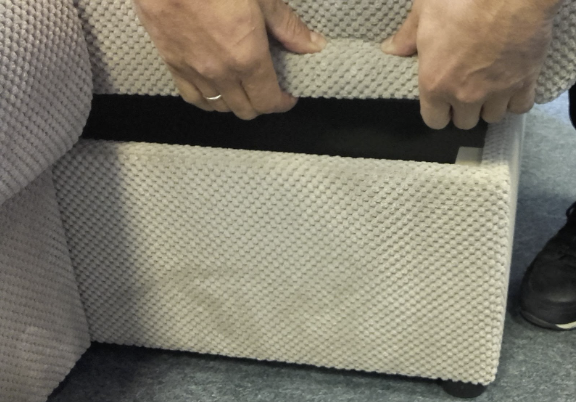
The second layer is called the supporting layer.
It is attached to the frame and its purpose is to support the spring layer. These are most often upholstery straps, zigzag springs, spring slats, particleboard or fibreboard. This layer determines how the backrest and seat behave. It affects comfort, but above all, it protects the furniture from the spring layer collapsing.
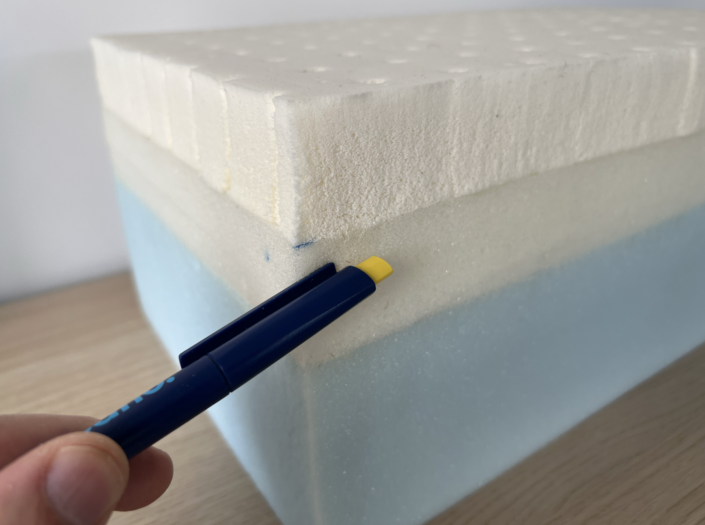
The next one is the spring layer.
This mainly consists of polyurethane foams, springs or bonnell spring units. Sometimes goose down, coconut fibres, latex or horsehair are also used. Depending on the type of materials used in this layer, we achieve different levels of comfort, noticeable, for example, when relaxing on our furniture.
There are many varieties of foam alone. Starting with upholstery foams marked with the letter T, through high-resilience (HR) foams, to visco foam. Foams differ in density and elasticity. This affects their durability and comfort. Did you know that one of them was developed by NASA and was intended for astronauts travelling beyond Earth? Do you know which foam parameter indicates its strength and which one indicates its elasticity?
Springs can also come in many varieties. The number of coils, the height of an individual spring, the diameter of the loop and the thickness of the wire used are some of the characteristics that differentiate springs. Among springs, we also have bonnell and pocket spring units.
I will write about the individual materials in the next article. The materials used determine when we will see the first indentations in the seat or feel a spring.
On top of the previously described layer there is the padding layer.
Its purpose is to provide a pleasant feel and hand feel. Thanks to it, we do not feel uneven surfaces or hard elements underneath the fabric. It is usually a non-woven fabric called batting. Other non-woven fabrics, sea grass or, for example, horsehair may also be used.
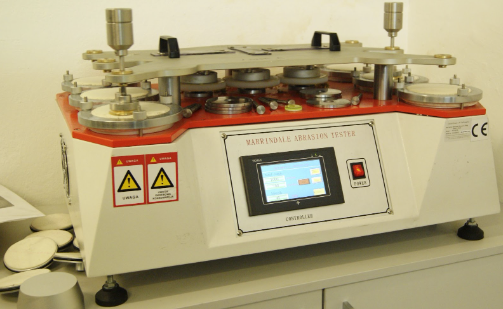
The upholstery layer is located at the very top.
It is made of fabric, knitted fabric or leather. Its type affects the aesthetics of the furniture. This is not the only function of upholstery materials. It is enough to look at the parameters of fabrics to realize that they are responsible for many potential Customer concerns.
The most important characteristic of a fabric is its abrasion resistance, usually expressed in the number of Martindale cycles. It is worth noting that these tests are carried out in very different ways and not always until the fabric shows signs of damage. Sometimes it is only checked whether the fabric meets the standard according to its intended use. For example, if a velour fabric should not show signs of damage after forty-five thousand passes of a felt disc over its surface, testing is stopped after that number of cycles. In another case, testing may continue. As a result, fabric specifications may show figures of one hundred or even two hundred thousand cycles. Comparing the two fabrics in such a situation does not always make sense.
An important characteristic of a fabric is its weight, resistance to pilling, dye migration when dry and wet, displacement of weft and warp threads, as well as resistance to daylight. I will describe these characteristics in further articles, which I already invite you to read today.
Knowledge of the construction of upholstered furniture is extremely important for Customers, Manufacturers and Sellers. This knowledge is also important for our service technicians. Their task is to resolve complaints, commissioned by our business partners, which have been submitted by their Customers. We do everything we can to ensure that the Customer feels that they have been taken care of.
Author: Łukasz Rachocki